






An automotive fuel pressure tester kit is a valuable diagnostic tool for anyone who wants to identify fuel delivery problems without immediately spending money on professional repairs. Whether you are a DIY car enthusiast, a home mechanic, or someone who regularly works on vehicles, checking fuel pressure can help you understand why an engine is running poorly, struggling to start, or losing power during acceleration.
Fuel system problems can be difficult to diagnose because several different components may produce similar symptoms. A weak fuel pump, clogged fuel filter, faulty pressure regulator, or restricted fuel line can all affect engine performance. An automotive fuel pressure tester kit helps narrow down the possibilities by measuring the pressure delivered by the fuel system.
In this review, we will examine the typical features, advantages, disadvantages, ease of use, and overall value of an automotive fuel pressure tester kit. Since different kits have different fittings, pressure ranges, and compatibility requirements, this review focuses on the general qualities to consider when choosing a suitable model.
What Is an Automotive Fuel Pressure Tester Kit?
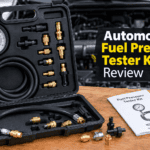
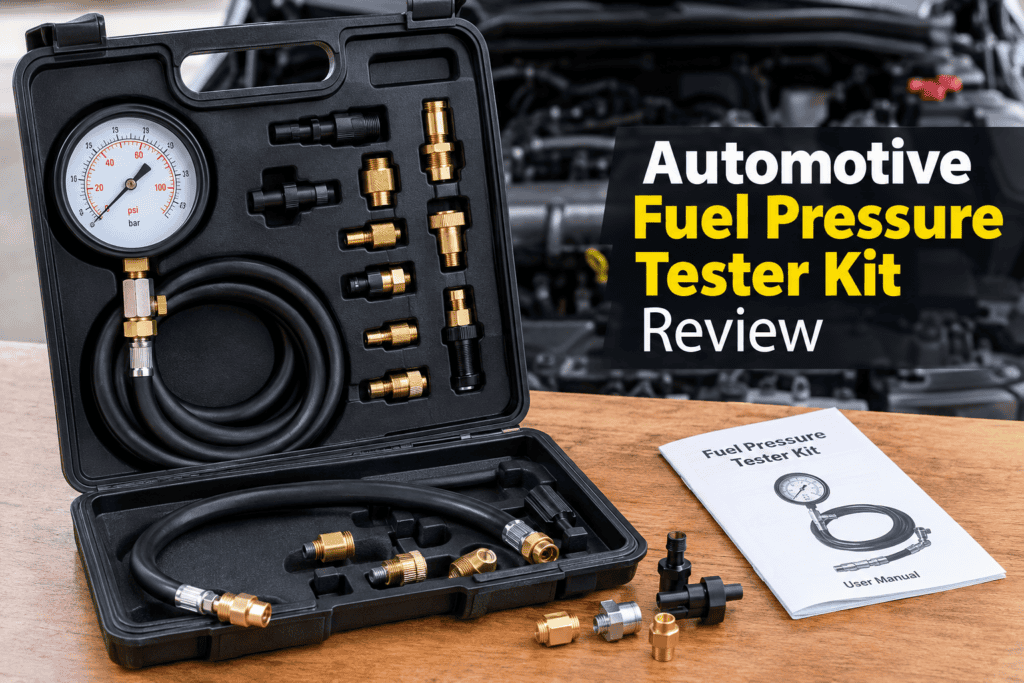
An automotive fuel pressure tester kit is a diagnostic instrument designed to measure the pressure within a vehicle’s fuel delivery system. Most kits include a pressure gauge, connecting hoses, adapters, and fittings that allow the tester to connect to compatible fuel system test ports.
The gauge displays the pressure generated by the fuel pump and maintained by the fuel system. Depending on the vehicle, the reading may be measured in pounds per square inch (PSI), bar, or another pressure unit.
These readings can be compared with the manufacturer’s specifications to determine whether the fuel system is operating within its expected range.
Some kits are designed primarily for older gasoline engines with conventional fuel injection systems. Others include additional adapters for a broader selection of vehicles.
It is important to understand that not every tester works with every car. Modern direct injection gasoline engines and diesel fuel systems may operate at extremely high pressures and require specialized equipment. A standard low pressure fuel tester must never be connected to a high pressure system unless the equipment is specifically rated and approved for that application.
Key Features to Look For
One of the most important features of an automotive fuel pressure tester kit is its gauge. A clear, easy to read dial makes it easier to identify pressure fluctuations and compare measurements with manufacturer specifications. A gauge with clearly marked increments is particularly helpful when diagnosing small pressure differences.
The pressure range is equally important. A tester intended for a conventional port fuel injection system may not be appropriate for other types of fuel systems. Before purchasing a kit, confirm that its operating range matches the specifications of the vehicle you intend to service.
Hose quality also deserves attention. A durable, fuel compatible hose should resist leaks and withstand the pressure for which the kit is rated. Secure connections help prevent fuel spills during testing.
Adapters are another important consideration. A kit with several compatible fittings can be more useful than a basic model that works with only a limited number of vehicles. However, having many adapters does not automatically guarantee broad compatibility.
Finally, a sturdy storage case can help keep the gauge, hoses, and fittings organized. This is useful for mechanics who move between vehicles or store their tools in a home garage.
Ease of Use and Installation
For compatible vehicles, an automotive fuel pressure tester kit can be relatively straightforward to use. However, the process depends on the vehicle’s fuel system design and whether it has an accessible test port.
On vehicles equipped with a suitable test port, the tester can generally be connected using the correct adapter. Some vehicles require a manufacturer approved alternative testing procedure, so it is essential to consult the service manual before beginning.
Once the tester is connected correctly, the fuel system is pressurized according to the manufacturer’s procedure, and the gauge reading is compared with the specified pressure.
The tester itself does not usually require complicated electronic setup. Its main purpose is to provide a direct pressure measurement, making it a useful addition to a basic automotive diagnostic toolkit.
Nevertheless, beginners should take their time. Gasoline is highly flammable, and an improperly connected tester can release fuel under pressure. Work in a well ventilated area, eliminate ignition sources, wear appropriate eye protection, and follow the vehicle manufacturer’s fuel system depressurization and testing procedures.
If you are unfamiliar with fuel system servicing, having an experienced mechanic perform the test is the safer option.
YouTube video from https://www.youtube.com/@chrisfix
Performance and Accuracy
An automotive fuel pressure tester kit is only useful if its readings are sufficiently accurate for the job. A well made gauge should provide consistent measurements within its stated accuracy range.
When diagnosing a problem, it is important to look beyond a single pressure reading. Fuel pressure may need to be checked under different operating conditions, depending on the manufacturer’s diagnostic procedure.
For example, low pressure may indicate a weak fuel pump, a restricted fuel filter, insufficient electrical power to the pump, or another delivery problem. A pressure reading that falls outside specifications does not automatically identify which component has failed.
Similarly, pressure that appears normal at one operating point does not necessarily prove that the entire fuel system is functioning correctly.
For the most useful results, compare the readings with the vehicle’s service information. Consider pressure stability, the specified testing conditions, and any additional diagnostic checks required.
A quality tester can make troubleshooting more systematic, but it should be treated as one part of the diagnostic process rather than a complete solution on its own.
Advantages of an Automotive Fuel Pressure Tester Kit
One of the biggest advantages is its ability to help diagnose fuel delivery problems before replacing expensive components. Rather than guessing that a fuel pump is faulty, you can obtain a pressure reading and use that information to guide further testing.
Another benefit is the potential to save money on routine diagnostic work. Vehicle owners who are comfortable performing basic mechanical tasks may find that owning a compatible tester reduces the need for repeated diagnostic appointments.
Versatility is another positive feature of kits supplied with multiple adapters. Depending on the included fittings, one kit may be suitable for several compatible vehicles.
The tool can also be useful for preventative troubleshooting. If a vehicle develops intermittent starting problems, hesitation, or unexplained power loss, fuel pressure testing may help determine whether the fuel delivery system deserves further investigation.
Finally, a mechanical pressure gauge offers a relatively simple way to observe fuel pressure without depending entirely on electronic scan tool data.
Disadvantages and Limitations
Despite its usefulness, an automotive fuel pressure tester kit has several limitations.
The first is vehicle compatibility. Fuel system designs differ considerably, and some modern vehicles do not provide a convenient conventional test port. A kit that works well on one vehicle may require additional adapters or may not be suitable for another.
The second limitation is that a pressure tester cannot identify every fuel system problem. It measures pressure, not every aspect of fuel delivery, electrical operation, injector performance, or engine management.
A fuel pump may require additional electrical testing, while a suspected injector problem may require separate diagnostic procedures.
Build quality can also vary between products. Lower cost automotive fuel pressure tester kit may have less durable hoses, poorly fitting adapters, or gauges that are difficult to read. A small leak or unreliable connection can compromise the test and create a safety hazard.
Finally, fuel pressure testing involves some risk. Anyone who is uncomfortable working around pressurized fuel should avoid attempting the procedure without suitable training.
Who Should Buy This Automotive Fuel Pressure Tester Kit Tool?
An automotive fuel pressure tester kit is worth considering for DIY mechanics, automotive students, and experienced vehicle owners who regularly troubleshoot gasoline fuel delivery problems.
It can be particularly useful for people who maintain several older vehicles equipped with compatible conventional fuel injection systems. In these situations, the ability to measure pressure directly can make diagnosis more efficient.
Professional mechanics may also benefit from a kit that includes durable components, reliable gauge accuracy, and the correct adapters for the vehicles they service.
However, casual drivers who rarely perform their own repairs may find that purchasing a tester is unnecessary. Paying a qualified technician to diagnose an occasional fuel system problem may be more practical.
Owners of modern direct injection gasoline vehicles or diesel vehicles should choose equipment specifically designed and rated for their systems rather than assuming a general purpose kit will be suitable.
Buying Tips: What to Check Before Purchasing
Before buying an automotive fuel pressure tester kit, check the manufacturer’s compatibility information carefully. Confirm that the kit supports your vehicle’s make, model, year, engine, and fuel system design.
Next, verify the gauge’s pressure range and accuracy specifications. A gauge should cover the pressure expected in your application while providing enough resolution to make useful comparisons.
Inspect the included adapters and connection types. A kit with many fittings is not necessarily the best choice if none of them matches your vehicle.
Pay attention to hose materials, connector quality, sealing components, and the manufacturer’s instructions for safe operation. Clear documentation is especially valuable for first time users.
It is also sensible to consider replacement parts and warranty coverage. A tester with replaceable hoses, seals, or adapters may offer better long term value than one that must be discarded when a small component fails.
Finally, compare the total cost with how frequently you expect to use the tool. The best purchase is not necessarily the cheapest kit or the one with the most accessories. It is the one that safely and reliably performs the diagnostic tasks you actually need.
Automotive Fuel Pressure Tester Kit: Pros and Cons
Pros
1. Helps diagnose fuel pressure problems more accurately than guesswork alone.
2. Can reduce unnecessary replacement of fuel system components.
3. Offers useful information when investigating hard starting, hesitation, and power loss.
4. May work with several vehicles when the correct adapters are included.
5. Can be a practical addition to a home mechanic’s diagnostic tools.
Cons
1. Compatibility varies between vehicles and fuel system designs.
2. Some modern systems require specialized testing equipment.
3. Gauge accuracy and component quality vary by manufacturer.
4. Does not independently diagnose every fuel delivery or engine performance problem.
5. Incorrect use can cause fuel leaks, fire hazards, or injury.
Final Verdict
An automotive fuel pressure tester kit can be a worthwhile investment for anyone who regularly works on compatible gasoline fuel systems. Its main advantage is the ability to replace guesswork with measurable information, helping users determine whether fuel pressure is within the vehicle manufacturer’s specified range.
A suitable kit can assist with troubleshooting starting difficulties, engine hesitation, and other symptoms associated with fuel delivery problems. It may also help prevent unnecessary parts replacement by directing attention toward the areas that need further investigation.
However, the quality of the kit, the accuracy of its gauge, and the availability of compatible adapters are essential considerations. Buyers should also remember that fuel pressure testing is only one step in a complete diagnostic process.
Overall, an automotive fuel pressure tester kit earns a recommendation for DIY mechanics and professionals who need a practical way to evaluate compatible fuel systems. Before purchasing, confirm vehicle compatibility, pressure ratings, and safety requirements. Choosing the right tester for your specific application will provide better results, improve diagnostic confidence, and help you make more informed automotive repair decisions.


